
Rain Gardens
Why Build A Rain Garden?
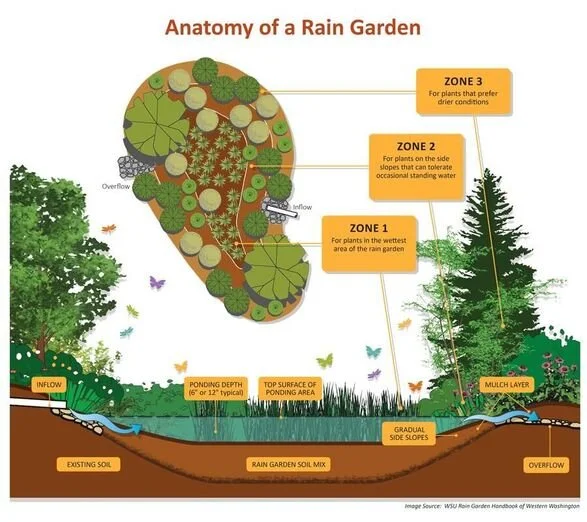
Rain gardens are attractive, low-maintenance landscape features that help manage stormwater while adding beauty and wildlife habitat to your yard. They can be designed to fit a variety of spaces and planted with native species that thrive in both wet and dry conditions.
Unlike a traditional garden, a rain garden is designed to collect and absorb stormwater. A specially prepared soil mix helps water soak into the ground, filtering pollutants before runoff reaches local streams and Puget Sound.
Benefits of Rain Gardens
Increase groundwater recharge by allowing water to soak into the ground
Reduce stormwater runoff, neighborhood flooding, and streambank erosion
Improve drainage and reduce standing water in your yard
Filter pollutants from stormwater before they reach local waterways
Provide food and habitat for beneficial insects, birds, and other wildlife
Add seasonal color and year-round interest to your landscape
Do you want to build a Rain Garden?
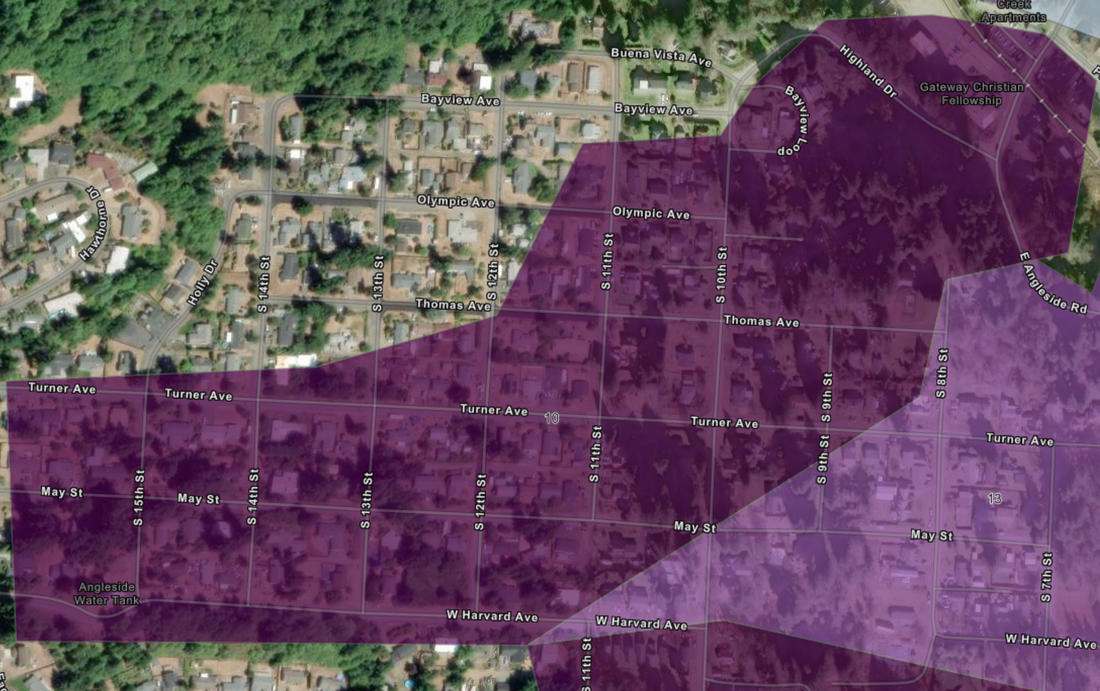
We are looking for five suitable properties in the Angleside neighborhood of the City of Shelton to install rain gardens. If you think your property would be suitable for a rain garden, please fill out this interest form so we can get back to you with more information.
For more information, contact Jen Thurman-Williams
[email protected] (360) 968-0030
This project has been funded wholly or in part by the United States Environmental Protection Agency under assistance agreement PC-01J95801-2 to the Washington State Department of Ecology. The contents of this document do not necessarily reflect the views and policies of the Environmental Protection Agency, nor does mention of trade names or commercial products constitute endorsement or recommendation for use.